
IS THE WORDPRESS PLATFORM A DINOSAUR?

IS THE WORDPRESS PLATFORM A DINOSAUR?


Some people are saying that WordPress is becoming obsolete — a relic from the early days of blogging that has been overtaken by sleek website builders and AI-driven platforms. The narrative suggests it is bloated, outdated, and too technical for modern small business owners.

But is WordPress really a dinosaur?

To answer that, it helps to understand where it came from — and where it stands today. (Or jump straight to the answer!)

From Simple Blogging Tool to Global CMS Leader

WordPress launched in 2003 as a straightforward blogging platform. It was built to make publishing online easier, allowing users to write posts without touching code. Over time, it evolved far beyond blogging. Developers expanded its capabilities, themes allowed design flexibility, and plugins added functionality ranging from contact forms to advanced SEO tools.

By the early 2010s, WordPress had transformed into a full content management system (CMS). It could power corporate websites, media publications, membership sites, learning platforms, and service-based business websites of all sizes.

For something allegedly “obsolete,” these numbers tell a different story:

Today, WordPress powers roughly 40%+ of all websites on the internet. Among CMS platforms specifically, it holds over 60% of market share. The next two closest competitors are Wix and Squarespace — both strong hosted website builders — but neither approaches WordPress’s scale or ecosystem.

The Reality of Modern Website Trends

Current website trends emphasize:

  • Search visibility and content marketing
  • Performance optimization
  • Platform flexibility
  • Integration with third-party tools
  • Ownership of digital assets

These trends actually strengthen WordPress’s position, especially for small, service-oriented businesses.

For companies that don’t need ecommerce functionality as their primary business focus, WordPress continues to align closely with business goals.

Let’s look at why.

1. Strong SEO/GEO Capabilities

Search engine optimization (SEO) and Generative Engine Optimization (GEO) are among the most important marketing disciplines for service businesses. WordPress excels in today’s AI-driven search environment.

It allows:

  • Full control over URLs and site structure
  • Custom metadata and schema markup
  • Integration with powerful SEO/GEO plugins
  • Performance optimization through caching and hosting choices
  • Long-form content marketing via blog posts

For local businesses, ranking in search results can directly translate into inbound leads. WordPress provides the structural flexibility to implement SEO correctly without platform restrictions.2

2. Cost-Effective Structure

WordPress itself is free, open-source software. Businesses only pay for hosting, a theme (if premium), and select plugins if needed.

Unlike closed platforms, there is no mandatory monthly subscription tied to the CMS itself. There are no escalating fees as traffic grows. There are no transaction fees if ecommerce isn’t being used.

For small businesses focused on lead generation and sharing their company mission—their unique value propositions rather than product catalogs—this helps keeps overhead low and predictable. Hosting competition also keeps pricing very reasonable.

When managed properly, WordPress offers enterprise-level capability at small-business cost.

3. Full Ownership and Portability

One of WordPress’s most overlooked advantages is ownership.

With WordPress:

  • You control your hosting.
  • You own your site files and database.
  • You can migrate providers if needed.
  • You are not locked into a proprietary system.

This portability reduces long-term risk. If a hosting provider increases prices or service declines, the site can move. If an agency relationship ends, the business still controls its digital asset.

That level of independence is increasingly valuable as online platforms consolidate and subscription costs rise.

4. Massive Ecosystem

WordPress has the largest ecosystem in the CMS world.

  • Thousands of themes
  • Tens of thousands of plugins
  • Global developer support
  • Deep integration with marketing platforms

From booking systems to CRM integrations to analytics tools, WordPress connects easily. This flexibility makes it adaptable as a business grows.

A small service website today can expand practically without limit with the use of high-quality well-supported plugins.

All this scalability prevents expensive rebuilds.

5. Accessible to Non-Technical Business Owners

Another misconception is that WordPress is “too technical.”

Modern WordPress installations allow business owners to:

  • Add new pages
  • Update service descriptions
  • Publish blog posts
  • Upload images
  • Edit basic layouts

All without any coding.

Block-based editors and page builders have made content management intuitive. For a non-technical owner willing to learn basic navigation, updating content requires minimal computer skills.

We’ve found that many of our clients are comfortable making blog posts and editing pages while we handle more advanced site updates. So together we can keep their most valuable marketing asset up-to-date.

This balance — professional-grade flexibility combined with approachable editing — is part of why WordPress remains widely adopted.

So Is It a Dinosaur?

The idea that WordPress is obsolete usually comes from comparisons with visually streamlined, hosted builders. Those platforms simplify setup, but often at the cost of flexibility, ownership, and long-term scalability.

WordPress, by contrast, remains adaptable. It continues to evolve. It supports modern design standards, integrates with AI tools, and works seamlessly with today’s marketing ecosystem.

There is currently no clear replacement on the horizon that combines:

  • Deep SEO/GEO/AI search-ready control
  • Market dominance
  • Open-source flexibility
  • Ownership independence
  • Cost efficiency

For service-based small businesses that do not need ecommerce infrastructure or its associated overhead, WordPress remains a practical and strategic choice.

It is not a “old-school”.

It is a mature, widely supported platform that continues to align with how small businesses generate leads, publish content, and control their digital presence.

For those reasons, WordPress is still a smart choice — and likely will be for the foreseeable future.


WHY REGULAR GOOGLE REPORTS MATTER FOR SMALL BUSINESSES

For small local businesses, online visibility is crucial. Customers are searching, comparing, and making decisions every day—and Google is often where that journey begins. Regularly reviewing your Google Business Profile, Google Analytics, and Google Search Console reports is one of the most important (and overlooked) habits a small or boutique business owner can build.

Used consistently, these tools provide clear, actionable insights that help businesses attract more customers, spot problems early, and make smarter decisions.

Google Business Profile: Your Digital Storefront

Your Google Business Profile is often the first thing potential customers often see before they even visit your website. Reviewing profile insights helps you understand how people find and interact with your listing.

Metrics like searches, calls, direction requests, and photo views reveal what’s working and what isn’t. A drop in phone calls may indicate outdated hours, missing services, or increased competition.

Monitoring reviews is just as critical. Responding consistently builds trust, improves visibility, and signals that your business is active and reliable.

Without reviewing these reports, you’re essentially guessing how your local presence is performing.

Google Analytics: Understanding Website Visitor Behavior

While your Business Profile shows how people find you, Google Analytics explains what they do once they reach your website. Regular reports reveal:

  • Which pages attract the most visitors
  • How users arrive (search, maps, social, ads—note that currently Google Analytics does not include a dedicated category specifically for AI search engines like ChatGPT. More about this in a future article)
  • Whether visitors take meaningful actions like calling, booking, or filling out forms

If visitors land on service pages but don’t convert, it may signal unclear messaging or weak calls-to-action. High mobile traffic with low engagement may point to mobile usability issues.

Even a simple monthly review can uncover opportunities to improve customer experience and increase conversions.

Google Search Console: How Google Sees Your Site

Google Search Console focuses on how your website performs in Google Search. It shows which queries trigger your site, how often pages appear, and where they rank.

For local search engine optimization (SEO), this is crucial. Reports can reveal:

  • Search terms customers actually use
  • Pages losing visibility over time
  • Technical issues like indexing or mobile problems

Catching issues early prevents small problems from becoming major traffic losses and helps measure the impact of updates or new service pages.

Consistency Beats Complexity

You don’t need to analyze data every day. What matters is reviewing summaries of the most important metrics. A simple monthly or quarterly reporting routine creates awareness, accountability, and better decision-making.

Together, Google Business Profile, Google Analytics, and Google Search Console reports form a complete picture of your local online presence. Reviewing them regularly with your marketing team helps keep your business competitive, visible, and easy for customers to find and choose.


STAYING VISIBLE IN THE AGE OF AI


STAYING VISIBLE IN THE AGE OF AI

How Business Owners Can Adapt for Generative Search Results

As web browsers and search engines—like Google’s Search Generative Experience (SGE) or Microsoft’s AI-enhanced Bing—increasingly integrate generative AI technologies, website managers and business owners are noticing shifts in how organic traffic reaches their sites. Unlike traditional search, where users click through ranked results, generative AI often summarizes answers at the top of the page, reducing clicks but still heavily relying on credible sources. The challenge: how do you ensure your website becomes one of those trusted sources?

THE SHIFT FROM SEARCH RESULTS WEB PAGE LINKS TO AI-GENERATED ANSWERS

Generative search pulls information from multiple high-authority sources to synthesize a quick, user-friendly response—sometimes without any click required. This has profound implications for SEO. Pages may now be cited in AI-generated responses without receiving clicks from the normal search result listings.

PROACTIVE STRATEGIES FOR AI SEARCH VISIBILITY

To thrive in this evolving environment, website owners must re-evaluate their content and site architecture with AI in mind:

  • Focus on High-Quality, Authoritative Content: AI prioritizes content from trusted sources. Double down on establishing E-E-A-T (Experience, Expertise, Authoritativeness, Trustworthiness) as you update your website. Cite credible sources when appropriate, create valuable content, and offer unique perspectives on your products and services that AI models can leverage.
  • Structure for Clarity and Scannability: AI systems excel at parsing well-organized content. Utilize clear headings (H1, H2, H3), bullet points, numbered lists, and concise paragraphs. Implement FAQ sections and “how-to” guides, as these formats are prime candidates for direct inclusion in AI-generated answers.
  • Prioritize User Intent and Conversational Language: AI search often involves more natural, conversational queries. Optimize your content to directly answer questions users might ask, and consider incorporating question-and-answer formats naturally within your text.
  • Improve Site Architecture: Ensure clean navigation, fast loading times, mobile responsiveness, and structured URLs. A logically organized site improves crawlability and contextual understanding by AI systems.

THE BOTTOM LINE

The landscape of search is rapidly transforming. Generative AI isn’t killing SEO—it’s evolving it.  By proactively updating your content and site structure with AI’s preferences in mind, website managers and business owners can not only mitigate potential traffic loss but also position their sites to be recognized as authoritative sources to ensure they’re not just found by machines, but also chosen by them to show as cited web pages in AI answer summaries.

Header photo Dress Code by Susan Graf, Healdsburg


OUT TO PASTURE

Our Non-responsive Websites

We love the websites we have worked on and maintained through the years. And we are grateful for all our clients who trust us with their website projects. But, as there’s no need for a portfolio to contain non-responsive sites anymore, and even although these sites are still working for our clients, we are moving non-responsive sites from our website portfolio to this post for posterity. So even though these websites are still working for our clients (some for over a decade, wow!), we need our portfolio to show sites which work on mobile devices.

Here they are, our final non-responsive website projects:

hubbardgodfrey.com

Built in 2007. We love that when we visit AT&T Park, we see their work.

donnadesmond.com

We started working with Donna in 2013. We still love the look of this site.

earnosethroat-sanramon.com

Made in 2011.

hpdpublicrelations.com

Running since 2012.


Save

Save


DON’T BE IGNORED!

Googles New Indexing


Flashback photo to Rachel and her brother, Iain, looking surly when told they were not getting what they wanted. Cute (occasionally) in children, but not for website owners who want their hard work recognized and their website displayed prominently in search engine result pages.

Google has recently changed the way they index websites and has brought down the gavel on sites that do not display well on mobile devices.

Now that people use their phones and tablets more than laptops and desktop computers to browse the web, Google has made this change to better serve their users and give them better access to the information they are seeking and that is designed to be easy for them to access.

We have looked at web traffic statistics for most of our clients’ websites and confirmed mobile users now account for over 50% of all traffic. But many of our clients still have non-mobile websites. Globally, about 17% of small businesses do not have a responsive site.

If you have a non-mobile-friendly site then you will be ranked lower than if you have a mobile-responsive website. If you have a separate mobile site, from your main website, only your mobile site pages will be indexed. This is according to multiple articles we have reviewed, as well as communications directly from Google.

So if you don’t have a mobile-responsive website, the time has come to put this on your marketing priorities list for 2018.

Besides the new Google indexing, non-responsive sites can damage your business in other ways:

  • Mobile devices are projected to reach 79% of global internet use by the end of 2018.
  • 88% of consumers who search for a type of business on a mobile device call or go to that business within 24 hours.
  • Average smartphone conversion rates are up 64% compared to desktop conversion rates.
  • 83% of mobile users say that a seamless experience across all devices is very important.
  • According to Google, 61% of users are unlikely to return to a site on mobile if they had trouble accessing it and 40% visit a competitor’s site instead.
  • Nearly 8 in 10 customers would stop engaging with content that doesn’t display well on their device.
  • 57% of internet users say they won’t recommend a business with a poorly designed website on mobile.

Please contact John if you’re in need of a new, mobile-friendly website.


WELCOME SET THE OCCASION


Welcome to our client list, Set the Occasion – Table Designs by Thena! We have loved working with such a talented and professional client. The web site looks great, and working on photoshoots with you in beautiful locations in Larkspur, Belvedere, and Corte Madera has been a highlight of our year.

Yes! SetTheOccasion.com is here! John coded this custom for Thena – beautifully responsive, deep linking portfolio pages, perfectly optimized photos, slideshows with several different progress options – well done, partner. I love the design – so simple and elegant and all about the photos.

Header to this blog post is a setting photo as we integrated it into a header graphic for the contact page.


Thena, we can’t wait to see where you take us next! We are grateful that you are taking us with you.


CONGRATULATIONS HIEC!

Hawaii Island Energy Cooperative

Congratulations to our favorite Hawaiian client! The Hawaiian Public Utilities Commission has voted to reject NextEra’s offer to acquire Hawaiian Electric Industries.  They’ve been working hard for a long time to achieve this result.

The Hawaii Island Energy Cooperative is a non-profit cooperative association formed by community and business leaders on Hawaii Island to explore the potential merits of a community-based, cooperative ownership structure for electric utility service on the Big Island. HIEC is also exploring how other energy sectors, such as transportation, can be transformed to be more sustainable and environmentally friendly.

Save


NEW WEBSITE LAUNCH!

SusanGraf.com

We’ve had a great experience working with Susan Graf and her brand designer, Marianne Mitten, on a new website for Susan Graf Limited.

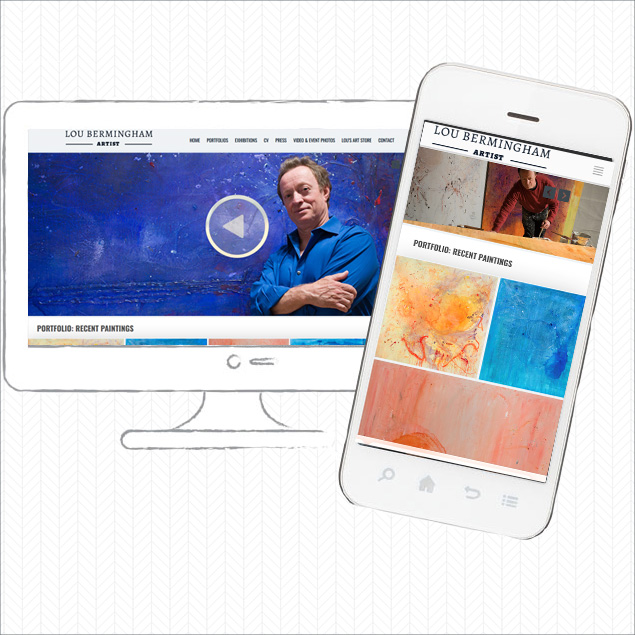
John coded it to be device responsive, so the code will render to it’s best depending upon the device – from smartphone to desktop monitor – the visitor is using.  The navigation changes from full screen sized to hamburger on a smartphone.  The font changes to be most readable depending upon the device.

The best part – this is not a WordPress or other template site so the client is not boxed in and there’s no monthly security and maintenance fee.

Responsive Website Design

We were also hired to do the copy writing and to photograph both locations.

Besides the fabulous mens’ and womens’ departments and charming staff, Susan Graf Limited offers styling, techno pants, and DRESS CODE by SUSAN GRAF. There’s a location on the plaza in Healdsburg and one in downtown Palo Alto.

Thank you, very much, Susan, for this project.  We’re looking forward to working with you (and of course, visiting both boutiques.)

Save

Save

Save

WEBSITE LAUNCH – ONE APPIAN WAY HOA

HOA Website

Thank you, Tri-State Enterprises, Inc. for hiring us to make another homeowners association website.  We use the same template for each of these site, which has a small, simple public section, and a large functional, password-protected, area for HOA members.  Within the members section, residents can manage their property, communicate with management and other residents, and interact with a property calendar.